Seniors & Retirees
What should retirees look for in their next home in eastern North Carolina?
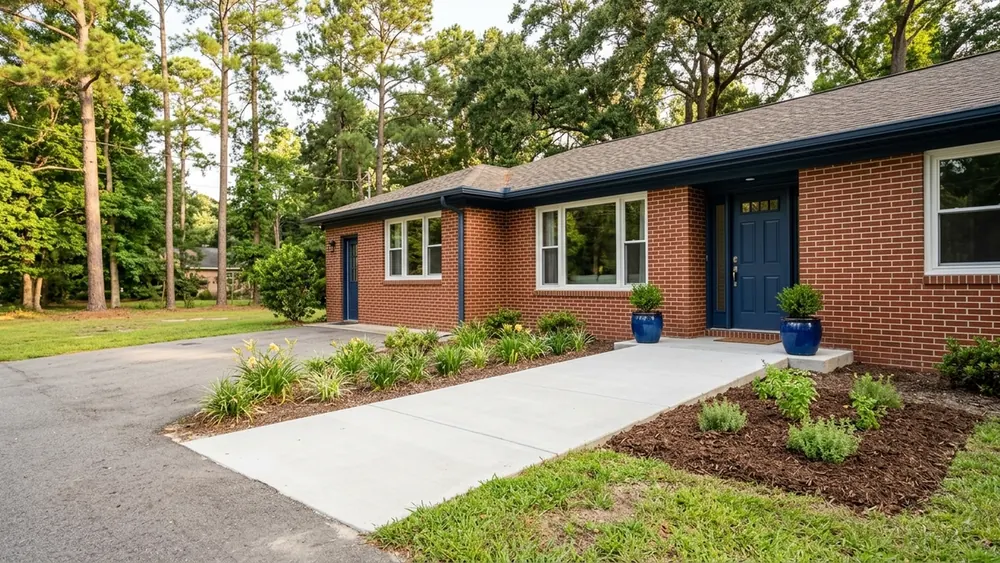
Look for a home that fits how you want to live next: how you handle stairs, how much upkeep you want, enough storage for what you keep, and a location near the people and places that matter to you.
On this page
Look for a home that fits your next chapter
If you are retired or close to it, look for a next home in eastern North Carolina that fits the way you want to live, not just the way you live today. Think about how you handle stairs, how much upkeep and yard work you want, how much storage you need for the things you keep, and how close you want to be to the people and places that matter to you.
Those questions matter more than any single feature in a listing. A home can look perfect online and still ask more of you than you want to give, whether that is a long climb to the bedroom or a yard that needs weekly care. Starting with your own needs keeps the search focused on homes that will work for you in daily life.
Matt Dew, a REALTOR® in Greenville who holds the SRES® designation, helps buyers in Greenville, Wilson and across eastern North Carolina think through these choices. The aim is not to tell you where to live. It is to help you ask the right questions about each home, so the decision you make is clearly yours and grounded in what you actually need.
Think about the daily routine first
Picture an ordinary day in the next home. Where do you sleep, where do you cook, where do you sit in the morning, and how do you get groceries from the car to the kitchen? Walking through a normal day in your head reveals more than a feature list ever will, because it shows where the home helps you and where it adds friction.
Single-level living is a priority for many buyers at this stage, and some are comfortable with stairs as long as the main bedroom and a full bathroom are on the main floor. Look at the entry too. Count the steps from the driveway to the door, notice whether there is a covered spot to get out of the car, and check how wide the hallways and doorways feel.
Bathrooms deserve a careful look. Notice the shower, the height of the fixtures and whether there is room to add grab bars later if you want them. Lighting matters as well, in the rooms and along the path from the bedroom to the bathroom at night. None of this needs to be perfect on day one, but it helps to know what could be adjusted.
Upkeep, yard and storage questions
Be honest about how much maintenance you want. Some buyers love a garden and a workshop and want to keep both. Others are ready to hand off the mowing and the gutters. Neither answer is wrong, but it should shape which homes you consider, because a home with more land or more systems simply asks for more of your time and attention.
If a property is part of an association, read its documents before you commit. They can explain what the association handles, what owners handle, which rules apply and how decisions are made. Confirm each of those points with the association itself rather than relying on a summary. Matt can help you request the documents and walk through the questions worth asking.
Storage is easy to overlook when you are downsizing. Before you tour homes, decide roughly what furniture, keepsakes, tools and seasonal items are coming with you. Then look closely at closets, the garage and any attic or bonus space. A home with too little storage can feel cramped quickly, even when the rooms themselves are the size you wanted.
Being near what matters to you
Location is personal, and only you can decide what you want to be close to. Some people want to stay near family, friends or a place of worship. Others want to be close to their doctors, a favorite park or the shops they use every week. Make your own list before you look, and use it to judge every home you see.
- The people you want to see often, and how you will get to them
- The doctors, pharmacies and services you rely on in a normal month
- The shops, parks, clubs and places of worship that fill your week
- How you plan to get around if you drive less in the future
Once your list is written, drive the routes yourself at the times of day you would actually travel them. That simple test tells you more than any map. It also keeps the decision about where to live where it belongs, with you, based on the places and people in your own life rather than on anyone’s description of an area.
A side by side look at the questions
When you tour several homes in a short stretch, the details blur together. A simple checklist helps you compare them fairly. The table below pairs the features many buyers check with a plain question to ask and the person who can answer it, so you know where each answer should come from. Add your own rows for anything that matters to you, such as a porch, a workshop or room for visiting family.
| What to check | Question to ask | Who can answer |
|---|---|---|
| Stairs and entry | Can I live comfortably on the main floor? | You, after a careful walk-through |
| Condition of the home | What repairs or updates might come up soon? | A licensed home inspector |
| Association rules | What does the association handle, and what do owners handle? | The association and its documents |
| Budget and payment | What can I comfortably pay, and how will I pay it? | A lender and a financial adviser |
| Ownership and estate plans | How should the home be titled for my plans? | A real estate or elder law attorney |
Matt can help you gather these answers and keep them organized as you compare homes. Bring the checklist to each showing and jot notes before you leave the driveway, while your impressions are still fresh. Over time the notes make the right choice easier to see. Patterns appear, like which homes kept you on the main floor and which ones asked for more upkeep than you want to take on.
Questions that belong with other professionals
Some of the most important questions about a next home are not real estate questions. How a purchase fits your income and savings is a conversation for a financial adviser. How to pay for the home, and whether a loan makes sense for you, is a conversation for a lender. Each of those answers depends on your own situation, so get them from the right person.
Taxes on buying and selling belong with a qualified tax professional. Questions about wills, trusts, powers of attorney or how the home should be owned belong with a real estate or elder law attorney. Questions about health coverage or benefits belong with an adviser for those programs. Matt can help you line these conversations up so nothing important waits until the last minute.
How to start your list
You don’t need to know exactly what you want before you start. A short written list gives your search a backbone and makes your first conversation with Matt much more useful. Try writing down these four things before you look at any homes. Keep it short and honest, and expect it to change a little as you see what is out there. The list is a tool to guide your choices, not a test to pass.
- The features you need in daily life, such as a main floor bedroom
- The features you would like but could live without
- The people and places you want to stay close to
- The questions you already know belong with a lender, adviser or attorney
When the list is ready, bring it to Matt, whether you are looking in Greenville, in Wilson or elsewhere in eastern North Carolina. There’s no rush and no pressure. The first conversation is about understanding how you want to live next, so every home you see after that is measured against your own plan. Matt will be on your side from the first conversation through the closing.
This article is general information about buying homes and condos in Wilson and Greenville, extending to the coast at Atlantic Beach, North Carolina, and the surrounding areas. It is not legal, tax, lending, insurance, flood or inspection advice and does not predict prices or promise results. Confirm flood zones and insurance with official sources and an insurance agent, association fees and rules with the association, financing with a qualified lender, and property condition with a licensed home inspector. Matt Dew, Matt Dew Real Estate.

Written by